Land Phone vs IP Phone: Which Telephone Set Is Better for Home & Office?
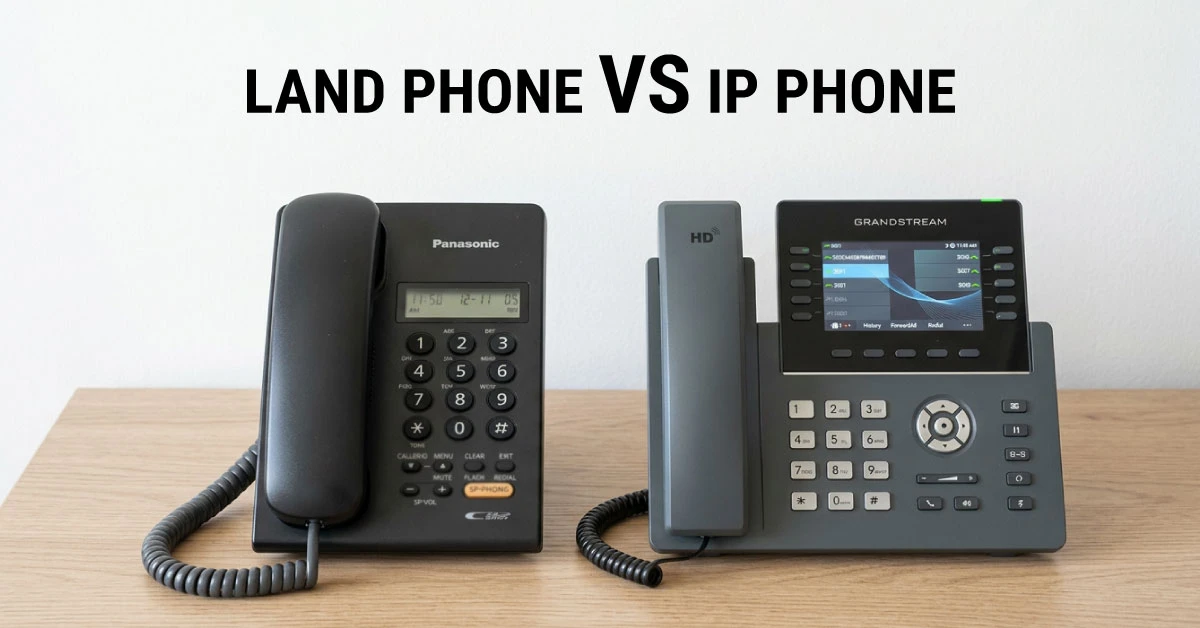
Many people get confused when choosing between a land phone set and an IP phone set. Both look like desk phones, both handle calls, and both can fit home or office use. But they do not work the same way. A land phone is better for simple calling, while an IP phone is better for office communication, extensions, SIP calling, and growing business setups. This guide explains the real difference so you can choose the right telephone set for your home, office, reception desk, hotel, clinic, or service counter.
Quick Answer: Land Phone or IP Phone?
Land Phone for Simple Calling
If you need a reliable desk phone for home use, a reception desk with a single line, or a low-traffic office counter where the only requirement is dialing in and out, a land phone set is the right choice. It connects to a standard telephone line (PSTN or PABX analog port), needs no internet, works during power cuts if the line has power, and is straightforward to use from day one. Panasonic corded and cordless land phones are a popular choice in Bangladesh for both home and light office use.
IP Phone for Office Communication
If your office has more than a few people, needs internal extension calling, runs on a VoIP or SIP account, uses an IP PBX system, or plans to grow its communication setup over time, an IP phone is the better fit. IP phones connect over your office LAN or internet connection and unlock features that analog phones simply cannot offer: call transfer, hold, conference calling, multiple SIP lines, and software-based management. Grandstream, Fanvil, and SNOM are well-established IP phone brands available in Bangladesh for office and enterprise use.
Land Phone vs IP Phone: Main Difference
Business Type
Essential Equipment
Optional / Growth Add-ons
Small retail shop
POS terminal, POS printer, thermal paper roll, barcode scanner
A land phone still makes complete sense in many everyday situations. If your calling setup is simple, a land phone gives you exactly what you need without adding network complexity or ongoing configuration.
Your home or office uses a standard PSTN telephone line and has no plans for VoIP or SIP calling.
You need a single-line desk phone for reception, front desk, or a low-traffic counter where only basic dialing is required.
You want a cordless phone that lets you move around the house or office floor while on a call, cordless Panasonic land phones handle this well without any network setup.
Your location has unstable internet but a reliable telephone line. A land phone keeps working even when the internet goes down.
You are setting up a hotel room phone, clinic bedside phone, or service counter phone where the only need is extension-to-reception or external dialing through a PABX.
When an IP Phone Is the Better Choice
If your office communication has outgrown a simple one-line setup, or if you are building a proper internal calling system, an IP phone is the right direction.
Your office runs on an IP PBX system and needs desk phones that register as internal extensions.
You use a VoIP or SIP trunk for calling instead of a traditional PSTN line, common in corporate offices, call centers, and international-call-heavy businesses.
You need call features your land phone cannot offer: call transfer, call hold, call forwarding, shared lines, BLF (Busy Lamp Field) keys to see extension status, or multi-line handling.
You want to run a conference call from the desk using a conference-capable IP phone with a built-in speakerphone and multiple SIP accounts.
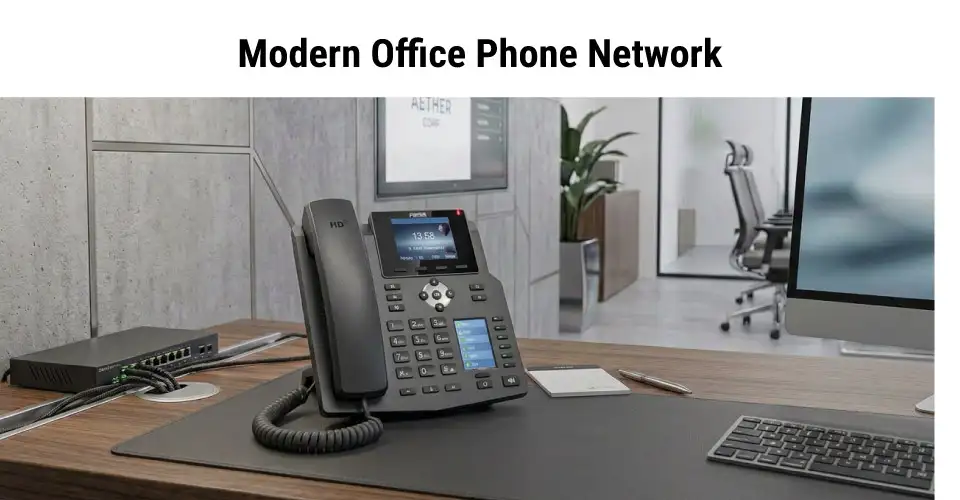
PoE support (Power over Ethernet) means an IP phone draws power through the network cable, removing the need for a separate power adapter. This simplifies desk cable management.
Your business plans to scale. Adding more IP phone extensions to an existing IP PBX is far simpler than expanding a traditional analog PABX.
Which Telephone Set Is Better for Home?
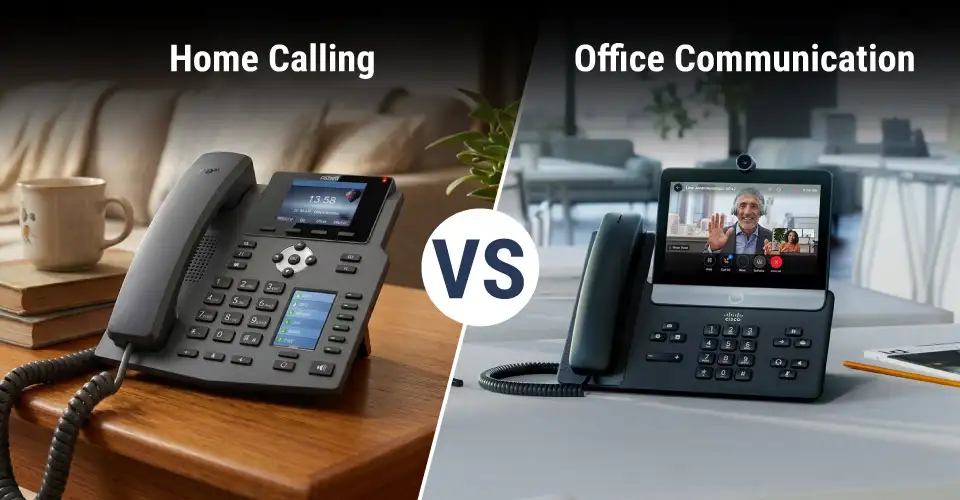
For home use, a land phone set wins on simplicity. You connect it to your existing telephone line, and it works. Cordless land phones add the convenience of moving around your home while on a call. Features like caller ID, speakerphone, redial, and intercom between handsets cover everything most households need. An IP phone at home only makes sense if you have a VoIP subscription and want to make low-cost international calls over the internet, or if you work from home and connect to your company’s IP PBX remotely. For standard home calling, a corded or cordless land phone set is the practical choice.
Which Telephone Set Is Better for Office?
Reception Desk
A reception desk phone handles inbound calls, transfers to internal extensions, and manages the first point of contact for visitors and callers. A land phone works if your office uses a traditional PABX and the reception only needs basic transfer and hold. An IP phone with programmable keys and BLF buttons works better if your reception manages multiple lines, needs to see which extension is busy, or operates on an IP PBX system. Either can work, the right choice depends on your current phone infrastructure.
Corporate Office
For a corporate office with multiple departments, internal extensions, and SIP trunk calling, IP phones are the standard. Every desk gets an IP phone registered to the IP PBX as an extension. Calls transfer cleanly between departments. Conference calls happen directly from the desk. Grandstream and Fanvil offer a wide range of IP phones from entry-level desk models to executive-grade phones with color displays and video calling capability, all available through Ryans’ IP phone set category.
Hotel, Clinic, or Service Counter
Hotel room phones and clinic bedside phones typically use a traditional analog PABX and require basic in-house calling: room to reception, reception to room, or room to room. A land phone set handles this perfectly and at lower cost than an IP deployment for a simple internal calling setup. Service counters in banks, hospitals, or customer service floors that need call queuing, transfer, and logging are better served by IP phones connected to a managed IP PBX.
Buying an IP phone without checking your network setup. An IP phone needs a working LAN connection and a SIP account or IP PBX to register with. Without these, the phone cannot make or receive calls. Confirm your network readiness before purchasing.
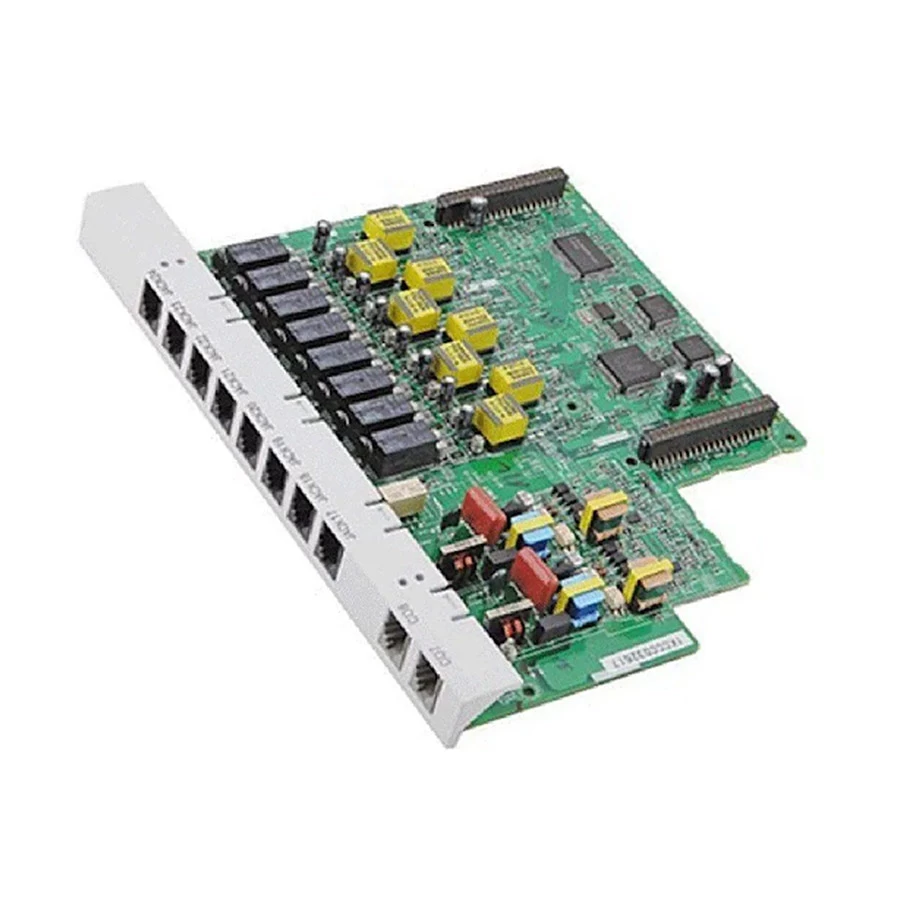
Assuming a land phone supports VoIP. A standard land phone only works on a PSTN or analog PABX line. If you want to use VoIP or SIP calling on a traditional phone, you need an Analog Telephone Adapter (ATA) or a gateway device in between.
Choosing a cordless phone for a shared office counter. Cordless land phones are great for home or individual desk use but are not built for high-call-volume shared counters. A wired IP phone or land phone with a robust handset is more durable for counter environments.
Ignoring PoE when planning an IP phone rollout. If your network switch does not support PoE (Power over Ethernet), each IP phone will need its own power adapter. Plan for PoE-capable switches if you want a clean, cable-efficient desk setup.
Buying telephone sets without checking telephone set price in Bangladesh across models. Land phone set price and IP phone set price in Bangladesh vary significantly by brand and feature level. Ryans carries a range across both categories so you can compare models and pick the right fit for your budget.
Frequently Asked Questions
Do small offices need an IP PBX?
Not always. A small office with three to five people sharing one or two telephone lines can manage with a basic analog PABX and land phones. An IP PBX becomes worth the investment when you need five or more extensions, SIP trunk calling, call logging, or a scalable system that grows with your team. For small offices moving toward hybrid or remote work, an IP PBX also allows softphones and mobile extensions which an analog PABX cannot support.
What is the difference between a SIP phone and an IP phone?
They refer to the same type of device in most practical contexts. SIP (Session Initiation Protocol) is the most widely used communication protocol for IP-based calling. When people say “SIP phone,” they mean an IP phone configured to register and make calls using a SIP account or IP PBX. All modern IP phones from brands like Grandstream, Fanvil, and SNOM are SIP-compatible.
Can I use an IP phone for international calls at lower cost?
Yes. This is one of the main reasons businesses switch to IP phones and VoIP. When your calls travel over the internet through a SIP trunk or VoIP provider, international call rates are significantly lower than traditional PSTN rates. For Bangladeshi businesses with regular international calling needs, switching to a VoIP-based system with IP phones can reduce communication costs noticeably over time.







Leave a comment