1 Ton Up to 120 sq ft
Small bedroom or study room
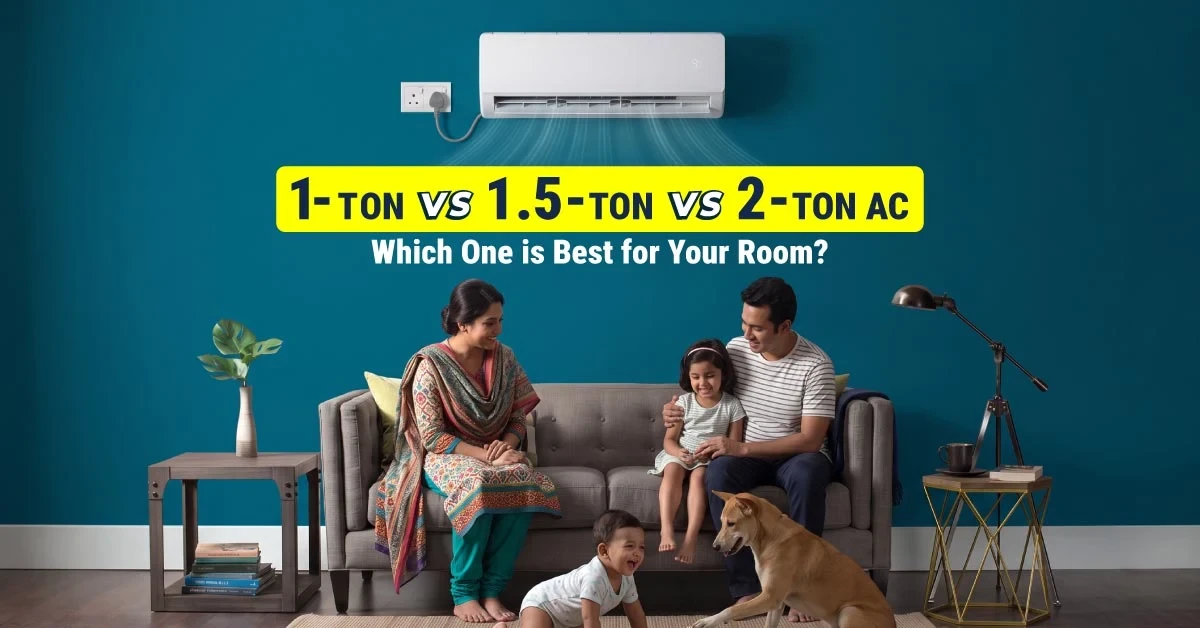
Does your AC run all day, but the room still won't cool? Or does it cool fast, then leave the air damp and sticky? Wrong AC size causes both. Bangladesh summers cross 35°C in April, and a room that felt fine last winter turns hot fast.
So how do you avoid both problems? Look at your room size first. Then check a few local factors, like sun and floor level. Do that, and picking the right size takes about 30 seconds. No guesswork needed.
This guide shows you through 1-ton vs. 1.5-ton vs. 2-ton ACs, explained in plain words. You'll learn what tonnage really means, why it decides your comfort, and how much cooling capacity your room actually needs. By the end, you'll know exactly which AC fits your space and why.
1 Ton Up to 120 sq ft
Small bedroom or study room
1.5 Ton 120–180 sq ft
Master bedroom or mid-size room
2 Ton 180–250+ sq ft
Large living or open-plan space

"Ton" doesn't mean weight here. It means cooling capacity. How much heat your AC can pull out of a room in an hour. The bigger the number, the stronger the AC.
This whole idea of "tons" started ages ago, back when people used blocks of ice to cool things down. Cooling power got measured by how much ice melted in a day. That old idea stuck around. Today, we measure tonnage in BTU. And the numbers are simple:
| Tonnage | BTU |
|---|---|
| 1 Ton | 12,000 BTU |
| 1.5 Ton | 18,000 BTU |
| 2 Ton | 24,000 BTU |
Don't guess your AC size from how the room feels. Measure it. It takes just a few seconds.
Say your room is 12 ft long and 10 ft wide. Multiply them: 12 × 10 = 120 sq ft. That's your answer.

A 1-ton AC works best for small spaces up to 120 sq ft. Think small bedroom, home office, or nursery. These rooms don't hold much heat, so a smaller AC keeps up just fine. Wondering 1 ton AC for how many square feet? Stick close to 120 sq ft as your top limit. Push past that, and the AC starts working too hard. It runs longer, cools less, and your bill creeps up.
This size also costs less to run each month. Less power used means more savings over the summer.

A 1.5-ton AC fits rooms around 120–180 sq ft. Think master bedroom or a small living room. Wondering 1.5 ton AC for how many square feet? Anywhere between 120 and 180 sq ft works well.
This is also the most popular size in Bangladeshi flats. Why? Most flat bedrooms and living rooms fall right in this range, matching the typical flat layout here. It's also the safer pick when your room sits right at the edge, like 130 sq ft.

A 2-ton AC fits large spaces, around 180–240+ sq ft. Think open living-dining areas, large studios, or drawing rooms full of guests. Wondering 2 ton AC for how many square feet? Anything past 180 sq ft usually needs this size.
This is the AC for Iftar and family gatherings. More people in one room means more heat, and a smaller AC just can't keep up. Open floor plans need this power too. Air spreads across a bigger area, so the AC has to pull harder to cool it all. Thinking about the best AC ton for the bedroom and living room? A bedroom rarely needs this much power, but a large living-dining space often does.
Here's your quick AC room size guide Bangladesh buyers can check in seconds.
| Room Size (sq ft) | Tonnage | BTU | Best For |
|---|---|---|---|
| Up to 120 sq ft | 1 Ton | 12,000 BTU | Small bedroom, study room |
| 120–180 sq ft | 1.5 Ton | 18,000 BTU | Master bedroom, mid-size room |
| 180–250+ sq ft | 2 Ton | 24,000 BTU | Large living room, open-plan space |

Check these five factors below, so your AC doesn't struggle all day.
| Factor | If Your Room Has This | Do This |
|---|---|---|
| Sun exposure | Fits 1 Ton by size, but has a west-facing window | Get 1.5 Ton instead |
| Ceiling height | Fits 1.5 Ton by size, but ceiling is above 10 ft | Get 2 Ton instead |
| Insulation | Fits 1 Ton by size, but has thin walls or gaps around doors | Get 1.5 Ton instead |
| Occupancy | Fits 1.5 Ton by size, but 3+ people use it often | Get 2 Ton instead |
| Heat-generating gear | Fits 1 Ton by size, but runs a PC, oven, or server for long hours | Get 1.5 Ton instead |
An undersized AC can add Tk 700–1,000+ to your bill every month. Let's put real numbers on it. Using Tk 10.63 per unit (kWh) as a rough Bangladeshi rate, here's what wrong sizing actually costs.
| Scenario | Monthly Use (kWh) | Estimated Cost (at Tk 10.63/unit) | What's Happening |
|---|---|---|---|
| Correctly sized inverter AC | 150–220 kWh | Tk 1,594–2,339 | Cools steady, then slows down to save power |
| Undersized AC (running full-load) | 220–320 kWh | Tk 2,339–3,402 | Runs nonstop, still can't fully cool the room |
| Oversized AC (short-cycling) | 190–260 kWh | Tk 2,020–2,764 | Turns on/off often, wastes power on restarts |
| Extra cost from wrong sizing | 70–100 kWh | Tk 744–1,063 | Pure loss: same room, worse comfort |
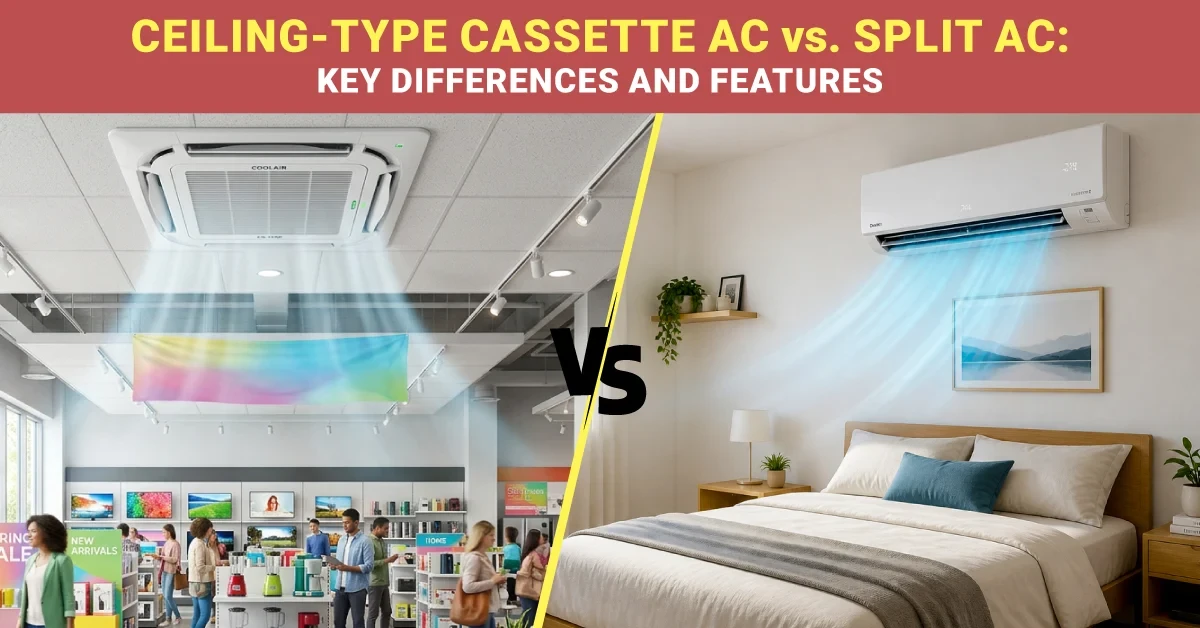
Tonnage tells you how much cooling you need. Split AC vs Cassette AC answers a different question. Where should that cooling actually go?
Wall-Mounted
A split AC has an indoor unit mounted on your wall, with an outdoor unit placed outside. This is the standard pick for home bedrooms and living rooms with a normal ceiling.
False Ceiling
A cassette AC sits inside a false ceiling instead. It spreads cool air in four directions, which works better for shops, offices, and open-plan spaces.
01
A non-inverter AC runs full power, then stops hard once cool. It restarts hard again when the room warms up.
02
An inverter AC slows the compressor instead of stopping it. This holds steady cooling with far less restarting.
03
Borderline room size? An inverter AC adjusts output to match, while a non-inverter AC only runs full power or off.
04
Since bedrooms run all day, that inverter alone can save Tk 300–500+ a month on the bill.
05
Look for the EER/SEER rating. Higher means better efficiency.
Some areas still deal with load-shedding, so if your room runs on IPS or backup, tonnage matters here too. A 1-ton or 1.5-ton draws far less strain than a 2-ton, which is worth sizing down if your backup capacity is limited.
Check our 10 best models before you shop.
That's the 1-ton vs. 1.5-ton vs. 2-ton AC breakdown, done. 1 Ton fits small bedrooms and home offices. A 1.5-ton AC suits master bedrooms and small living rooms, the most common pick in BD flats. 2-ton AC covers open living spaces and guest-heavy rooms.
Measure first, adjust for hidden factors, and check our full buying guide before browsing Ryans' Split and Cassette AC range, with EMI and warranty included.
Multiply length × width in feet, check the chart, then adjust for sun, ceiling height, and people using the room.
Yes, for large rooms. But oversizing a small room causes short-cycling, cold air with poor dehumidification.
Up to 120 sq ft. Small bedrooms, home offices, and nurseries fit this size well.
120–180 sq ft. Master bedrooms and small living rooms usually need this size.
180–250+ sq ft. Open living-dining areas and guest-heavy rooms need this power.
Go with 2 Ton. A 1.5 Ton will struggle to cool this size properly.
Yes. Inverter slows down instead of stopping, cutting restart waste and lowering your monthly bill.
No Comments











Leave a comment