01
Tea and Coffee Drinkers
Prepare hot drinks several times a day without using the stove.
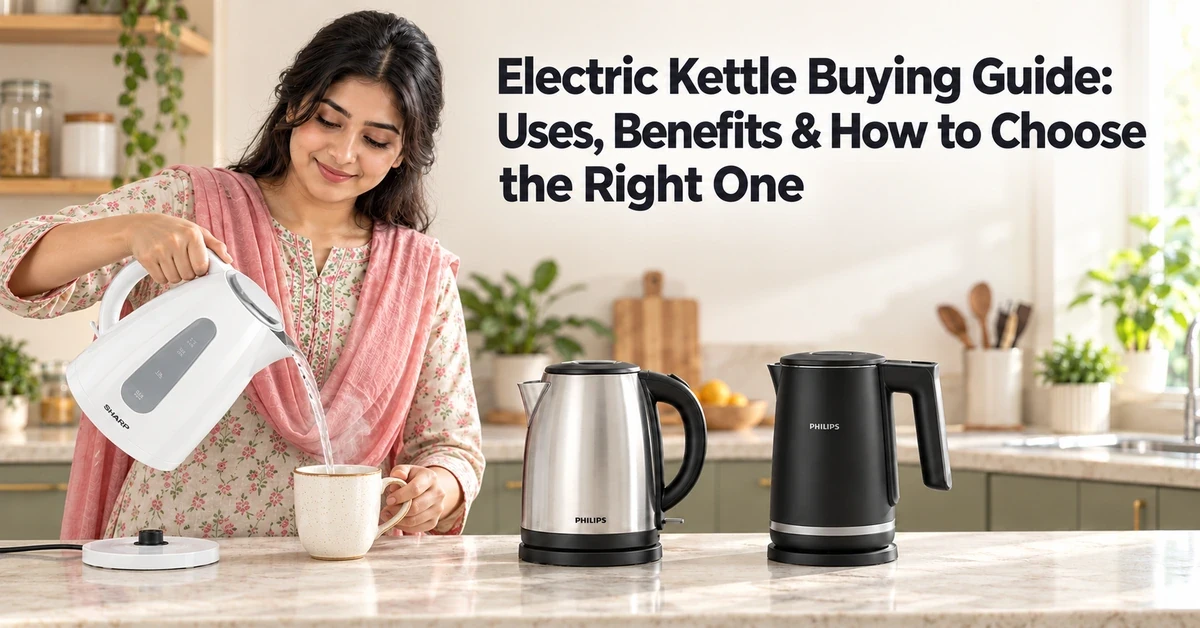
An electric kettle is useful when you need hot water for tea, coffee, instant soup, or other everyday tasks. It can be especially suitable for students, bachelors, office workers, and families who want hot water without using a stove each time.
However, the best electric kettle is not necessarily the most expensive or the most powerful one. You need to consider how much water you usually boil, how often you use it, where you will keep it, and which safety features matter to you.
This electric kettle buying guide covers the main features, material options, and everyday uses to help you choose a suitable model in Bangladesh. It also explains what to check before choosing an electric kettle.
An electric kettle is a small appliance that heats water using electricity. It usually has a heating element, handle, lid, pouring spout, and power base or cord.
When switched on, the heating element warms the water until it boils. Most models then shut off automatically. A concealed heating element sits beneath the kettle's inner base, making cleaning easier by reducing direct exposure to mineral deposits.
An electric kettle is useful for preparing tea, coffee, and other hot drinks. However, most standard models are designed for water only. Do not heat milk, soup, or other liquids unless the manufacturer confirms that the kettle supports them.
An electric kettle is a practical choice for anyone who needs hot water quickly and regularly. It can be especially useful for:
01
Prepare hot drinks several times a day without using the stove.
02
Heat water easily in a small living space.
03
Keep hot water ready for tea, coffee, or instant drinks.
04
Choose a suitable capacity for preparing hot drinks for several people.
05
Save time when boiling water for daily kitchen tasks.
If you rarely need hot water, a basic kettle may be enough. Temperature controls and other extra features are worth considering only if you will use them regularly.

At Home
Use a kettle to heat water for tea, coffee, and other drinks prepared separately. You can also pour boiling water into a suitable bowl for instant soup or noodles when the packet instructions allow it.
In an Office Pantry
A kettle lets employees prepare drinks without using a stove. For shared use, consider capacity, boiling speed, safe pouring, and cleaning access.
For Students and Bachelors
A mini electric kettle may suit someone who usually prepares one or two cups. Check its minimum fill level: a compact model is not necessarily practical if it requires more water than you normally need.
While Traveling
A portable kettle can be useful when your accommodation permits it. Check its size, weight, destination voltage, plug compatibility, and accommodation rules. A plug adapter does not necessarily convert voltage, so confirm the model's electrical requirements before use.
An electric kettle provides convenient access to hot water, but its benefits depend on the model and your routine.
Convenient heating
Heat water without setting up a stove or saucepan.
Simple operation
Many models work with a switch or button.
Compact design
A jug kettle can fit into a small kitchen or office pantry.
Controlled pouring
A comfortable handle and well-designed spout can make pouring easier.
Automatic stopping
Models with auto shut-off stop heating at their designed stopping point.
Less unnecessary heating
Heating only the water you need can avoid waste, provided you respect the minimum fill level.
01

Capacity determines how much water the kettle can hold. Choose according to your usual batch size rather than buying the largest model.
1.0–1.2L
Worth considering for one person.
1.5L
May suit couples or small households.
1.7L
A practical option for many families and shared offices.
Larger
Consider them if you regularly need more hot water and have enough storage space.
Always check the minimum and maximum fill markings. The maximum prevents overfilling, while the minimum indicates the required water level for operation. If you usually make one cup, a high minimum fill level may mean heating more water than necessary.
02

Wattage measures the electrical power an appliance uses while operating. Generally, a higher-wattage kettle can heat the same quantity of water faster under comparable conditions. Actual boiling speed also depends on the starting water temperature and kettle design.
For example, Ryans lists the Philips HD9303 kettle with a 1.2-litre capacity and 1800W power, while the Sharp kettle range includes higher-wattage options. Compare the exact model specifications before deciding.
Higher wattage does not automatically mean lower electricity bills. Consider how much water you heat, how often you use the appliance, and whether your electrical setup supports its power requirements.
03

The material affects weight, appearance, cleaning, and handling. Check the inner surface that touches water, not just the outer body.
Stainless Steel
A practical option for regular use. It can be durable, although the exterior may become hot and water marks may appear.
Glass
Lets you see the water inside but requires careful handling because it can break.
Plastic
Often lightweight and available in lower-priced models. Check the material quality and the manufacturer's information about water-contact parts.
When comparing stainless steel vs glass electric kettle options, neither is automatically best. Choose according to your budget, cleaning routine, and handling preferences.
Double-wall construction may help reduce heat transfer to the exterior, but confirm whether the specific model offers it.
04

Stops heating at the model's designed stopping point, usually after boiling.
Helps prevent continued heating when there is too little or no water.
Helps reduce spills during heating and pouring.
Helps keep the kettle properly positioned.
Support better control when pouring hot water.
These features do not replace careful handling. Verify them in the product specifications instead of assuming every kettle includes them.
Think about where and how you will use the kettle before comparing brands or prices.
| Your situation | Main need | Suitable kettle direction | What to check |
|---|---|---|---|
| One person or student | Small batches | Compact 1.0–1.2L model | Minimum fill and storage |
| Family | Several cups | Around 1.5–1.7L | Capacity and handling |
| Shared office | Repeated use | Larger jug | Power and cleaning access |
| Specialty tea or coffee user | Temperature control | Adjustable-temperature model | Temperature settings |
| Traveler | Portability | Small, lightweight model | Voltage, plug, and accommodation rules |
An electric kettle is convenient for preparing hot water for tea, coffee, and other warm drinks during winter. You can also use it for suitable instant soups prepared separately according to their instructions.
These uses apply throughout the year, so you do not need to buy a kettle specifically for winter. Choose a model that fits your regular routine.
01
A large kettle may take up more space and may not suit someone who makes one cup at a time. Check the minimum fill level, too.
02
Higher wattage can heat water faster, but it does not automatically reduce electricity costs.
03
A stainless-steel exterior does not guarantee that every water-contact part is stainless steel. Check the product details.
04
Auto shut-off and boil-dry protection perform different functions. Confirm which features are included.
05
Most kettles are designed for water. Milk can foam or leave residue, making cleaning difficult. Use another suitable appliance unless the manufacturer explicitly permits other uses.
06
Boiling time depends on water quantity, starting temperature, power, and design. Check model-specific information.
07
Confirm the voltage and power requirements. Avoid damaged plugs, loose sockets, and wet power bases.
Follow these steps to keep your kettle clean and in good working condition.
01
Follow first-use instructions.
Rinse or clean the kettle as directed by the manufacturer.
02
Respect MIN and MAX markings.
Do not operate below the minimum or fill above the maximum.
03
Close the lid before heating.
Place the kettle on a stable, dry surface.
04
Keep the base dry.
Never immerse the powered base, plug, or electrical parts in water.
05
Pour carefully.
Hot water and steam can cause burns.
06
Clean as needed.
Follow the manufacturer's cleaning instructions and avoid abrasive tools.
07
Descale when deposits build up.
Cleaning frequency depends on water conditions, usage, and visible deposits.
White marks inside a kettle are often limescale, which forms when minerals in water remain after repeated heating. Descaling removes these deposits using a method approved by the manufacturer. If the kettle has a removable filter, clean it according to the instructions.
Before buying, check the following:
01
Does the capacity match my usual water quantity?
02
Is the minimum fill level suitable for small batches?
03
Are the voltage, wattage, and plug suitable for my electrical setup?
04
Have I verified the safety features?
05
Is the interior material suitable for my preferences?
06
Is the handle comfortable and the spout easy to control?
07
Can I clean the interior and filter, if fitted?
08
Will I use extras such as temperature control or keep-warm?
09
Have I checked the local warranty, current price, and stock?
The best electric kettle is not necessarily the largest or most expensive. Start with your usual water quantity, then compare safety features, material, handling, and cleaning needs. A compact model may be enough for one person, while a larger jug may suit a family or shared office.
To decide which electric kettle is best for you, focus on features that solve your everyday needs instead of paying for extras you rarely use. Compare currently available models in the Ryans electric kettle category.
It depends on wattage, water quantity, starting temperature, and kettle design. A small amount generally takes less time to heat than a full jug. Check the manufacturer's stated boiling time for the exact model.
Auto shut-off stops heating at the kettle's designed stopping point, usually after boiling. Boil-dry protection helps prevent continued heating when there is too little or no water. Check whether the model includes both.
No. A cordless jug can be lifted from its powered base for pouring, but it needs electricity through the base to heat water. “Cordless” describes the jug's connection to the cord, not battery operation.
It can be useful if you regularly prepare drinks that need different water temperatures. If you mainly boil water for ordinary tea, coffee, or instant drinks, a basic kettle may be enough.
White scale is usually limescale left by minerals in water after repeated heating. Its buildup depends on water conditions and usage. Remove it using the manufacturer's recommended descaling method.
A standard kettle is designed mainly for heating water, not cooking eggs. Eggs may make cleaning difficult or interfere with normal operation. Use a saucepan or another suitable appliance unless the manufacturer explicitly permits this use.
Follow the manufacturer's cleaning and descaling instructions. Use only an approved method for removing mineral deposits, then rinse as directed. Keep electrical parts dry and avoid abrasive cleaners that may damage the interior.
No Comments










Leave a comment